

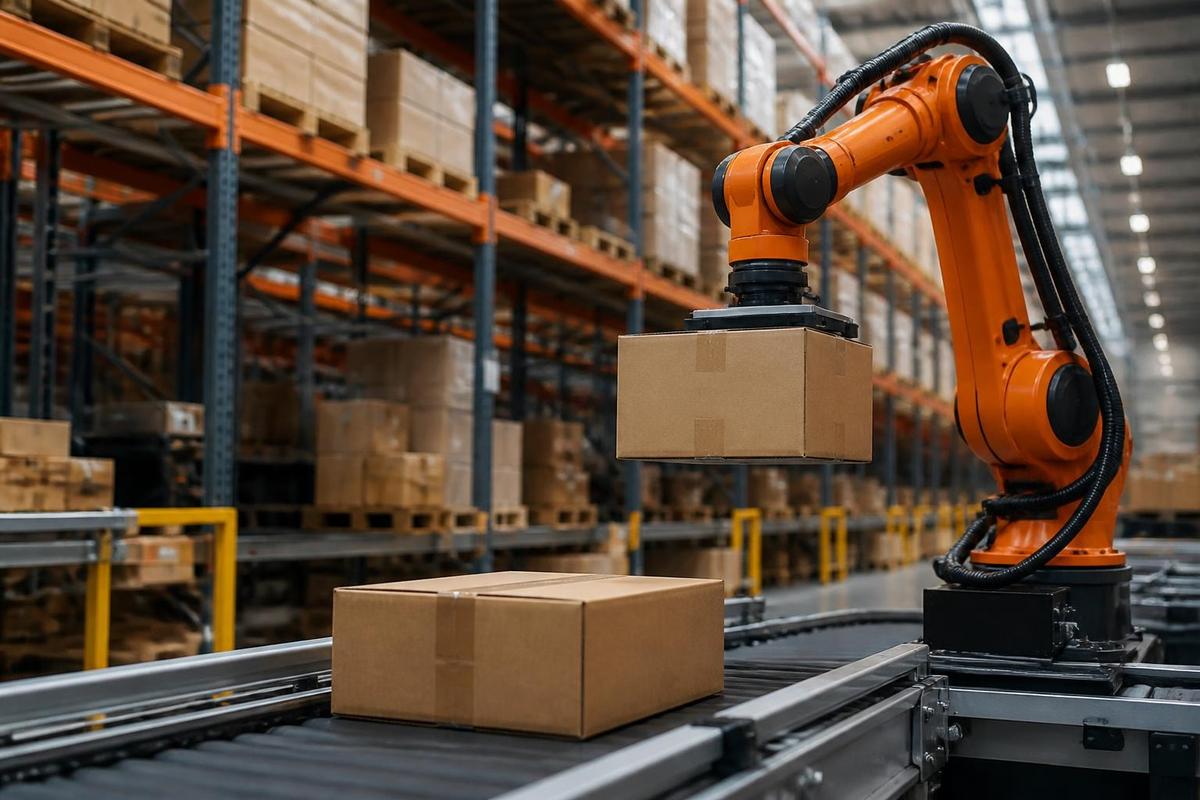
Solutions for Automation: A Strategic Guide for 2026
Share on
The landscape of warehouse operations has undergone a dramatic transformation over the past decade, driven by exponential growth in e-commerce, evolving customer expectations, and increasing labour pressures. As businesses seek competitive advantages in 2026, solutions for automation have emerged as critical enablers of operational excellence, offering pathways to enhanced efficiency, accuracy, and scalability that manual processes simply cannot match. This comprehensive guide explores the strategic considerations, technology options, and implementation approaches that define successful automation initiatives within modern warehouse environments.
Understanding the Automation Solutions Landscape
The warehouse automation ecosystem encompasses far more than isolated robotic systems or software platforms. Modern solutions for automation represent integrated environments where hardware, software, and human expertise converge to create intelligent operational systems. These solutions range from targeted improvements addressing specific bottlenecks to comprehensive transformations that reimagine entire fulfillment processes.
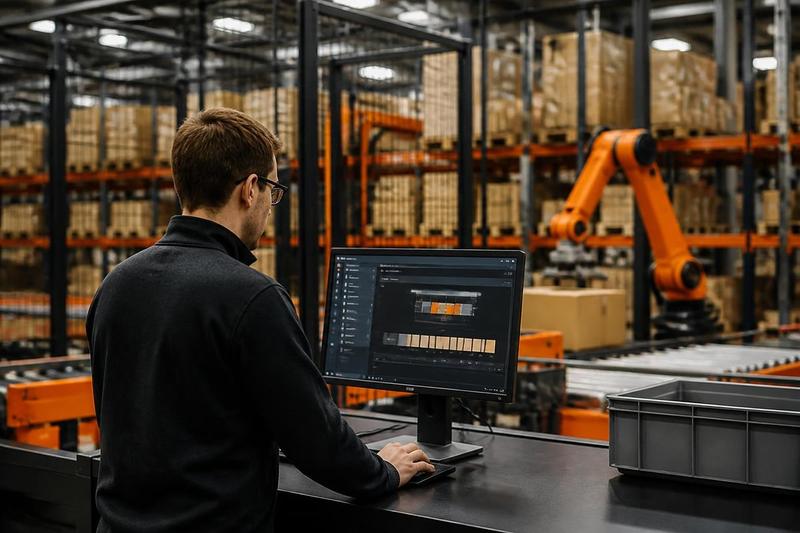
Warehouse operators today face a fundamentally different challenge than their predecessors. The traditional approach of adding labour to handle increased volumes has become economically unsustainable in many markets, particularly across Australia and New Zealand where labour availability and costs continue to constrain growth. Meanwhile, customer expectations for same-day and next-day delivery have compressed operational timeframes, leaving minimal room for error or inefficiency.
The Strategic Value Proposition
Solutions for automation deliver value across multiple dimensions that extend well beyond simple cost reduction. While labour savings remain a compelling benefit, the broader value proposition encompasses improved accuracy, enhanced throughput, better space utilisation, and increased operational flexibility.
Key value drivers include:
- Accuracy improvements: Automated systems consistently achieve pick accuracy rates exceeding 99.9%, compared to typical manual rates of 97-98%
- Throughput scaling: Automation enables linear or better scaling of capacity without proportional labour increases
- Space optimisation: High-density storage systems can increase storage capacity by 200-400% within existing facilities
- Labour redeployment: Automation shifts workers from repetitive tasks to value-adding activities requiring human judgment
- Data generation: Automated systems create comprehensive operational data that enables continuous improvement
The International Society of Automation (ISA) offers a comprehensive collection of publications that detail how automation technologies have evolved to address these value drivers across various industries, including warehouse and logistics operations.
Categories of Warehouse Automation Solutions
Modern warehouse automation solutions span a broad spectrum, from simple mechanisation to advanced autonomous systems powered by artificial intelligence. Understanding these categories enables informed decision-making about which solutions best address specific operational challenges.
Goods-to-Person Systems
Goods-to-person (GTP) solutions represent one of the fastest-growing segments within warehouse automation. These systems bring inventory directly to stationary picking stations, eliminating unproductive walking time and enabling workers to focus entirely on picking activities.
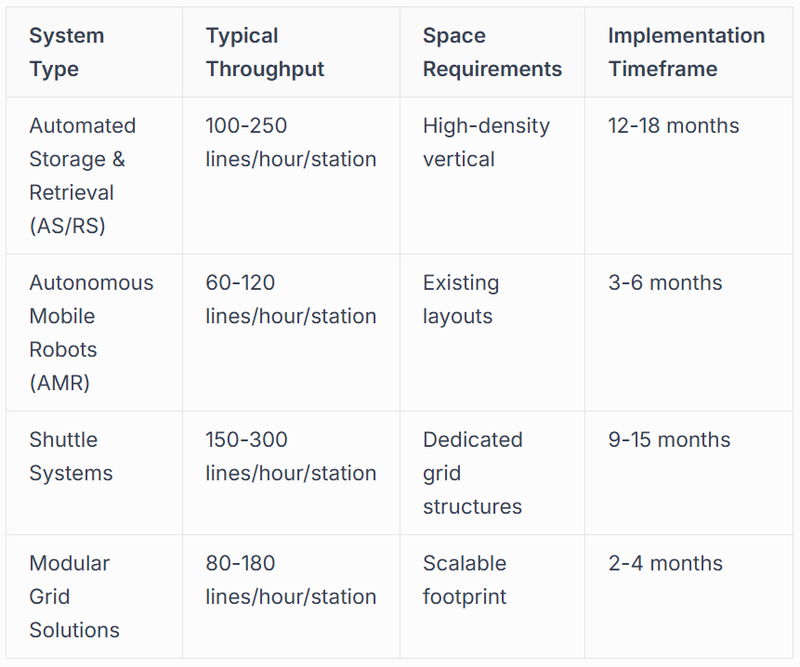
The Automate-X GTP Starter Grid provides an accessible entry point for small and medium businesses looking to implement goods-to-person automation without the extensive capital commitment of larger systems, offering a practical path to begin the automation journey.
Robotic Picking Solutions
Robotic picking technologies have advanced significantly, moving from rigid fixed-position systems to adaptive solutions capable of handling diverse product profiles. While full robotic piece-picking remains technically challenging for highly variable SKU profiles, specific applications have achieved production-ready maturity.
Collaborative robots (cobots) work alongside human pickers, assisting with repetitive motions while allowing workers to handle exception cases requiring human judgment. Depalletising robots efficiently break down incoming pallets, while case-picking robots handle standardised packaging formats at high speeds.
Conveyor and Sortation Systems
Transport and sortation infrastructure forms the circulatory system of automated warehouses, moving products between functional areas with minimal manual intervention. Modern conveyor solutions incorporate intelligent routing, automatic dimensioning, and dynamic flow balancing.
Advanced sortation technologies include:
- Crossbelt sorters: High-speed diversion for small parcels and polybags
- Tilt-tray systems: Gentle handling for fragile items at medium speeds
- Sliding shoe sorters: Robust handling for cartons and heavy items
- Bomb-bay sorters: High-density sorting with minimal space requirements
These systems integrate with warehouse management platforms to orchestrate product movement based on order priorities, destination requirements, and system capacity constraints.
Software-Driven Automation
Solutions for automation increasingly rely on sophisticated software layers that coordinate physical automation, optimise workflows, and enable adaptive decision-making. Warehouse execution systems (WES) sit between warehouse management systems (WMS) and physical automation, providing real-time orchestration and optimisation.
Advanced analytics platforms process operational data to identify inefficiencies, predict maintenance requirements, and recommend process improvements. Machine learning algorithms continuously refine picking strategies, slotting decisions, and labour allocation based on observed patterns and outcomes.
Strategic Implementation Approaches
Successful automation initiatives require systematic planning that aligns technology investments with business objectives while managing risk and ensuring operational continuity. The implementation approach significantly influences both short-term disruption and long-term value realisation.
Assessment and Planning Phases
Comprehensive operational assessment forms the foundation of effective automation strategies. This process examines current workflows, identifies bottlenecks, quantifies performance gaps, and establishes baseline metrics against which improvements will be measured.
Critical assessment activities:
- Volume analysis: Current and projected throughput across time periods and product categories
- SKU profiling: Velocity distribution, dimensional characteristics, and handling requirements
- Process mapping: Detailed workflow documentation identifying manual touchpoints and decision points
- Space analysis: Current utilisation, expansion constraints, and layout optimisation opportunities
- Labour evaluation: Role distribution, productivity metrics, and recruitment/retention challenges
The assessment phase typically reveals that operational challenges cluster around specific processes rather than distributing evenly. This concentration enables targeted solutions that address the most significant constraints with appropriate technologies. Our warehouse automation technologies resource provides detailed guidance on matching technologies to specific operational requirements.
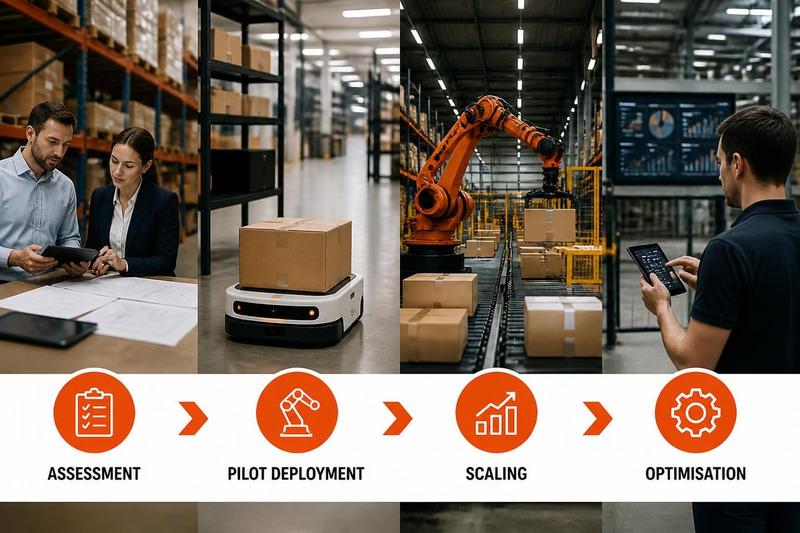
Pilot and Scaling Strategies
Piloting automation solutions in controlled environments reduces implementation risk while generating practical insights that inform broader deployment. Effective pilots establish clear success criteria, maintain operational independence from legacy processes, and incorporate learning mechanisms that capture lessons for future phases.
Scaling from pilot to production represents a critical juncture where many automation initiatives encounter unexpected challenges. Systems that performed flawlessly at pilot scale may reveal integration issues, capacity constraints, or workflow conflicts when expanded. Structured scaling approaches incorporate progressive volume increases, systematic validation at each threshold, and contingency plans that preserve operational continuity.
Technology Selection Considerations
Choosing appropriate solutions for automation requires balancing multiple factors including technical capability, implementation complexity, total cost of ownership, and strategic flexibility. The optimal solution for any specific operation depends on unique operational characteristics, business constraints, and strategic priorities.
Total Cost of Ownership Analysis
Capital expenditure represents only one component of automation investment. Comprehensive financial analysis incorporates ongoing operational costs, maintenance requirements, software licensing, system upgrades, and expected service life.
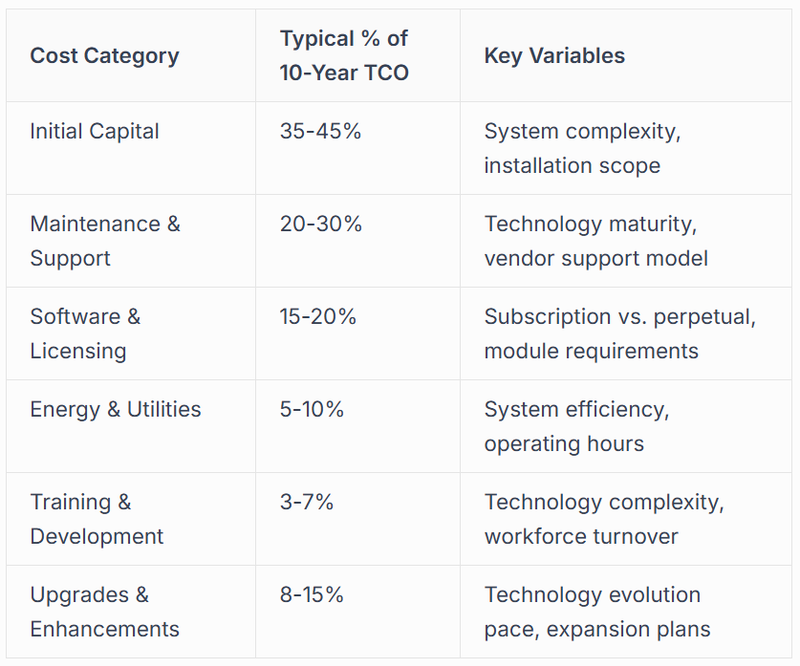
Understanding these cost distributions enables realistic budget planning and prevents underestimation of ongoing investment requirements. Solutions with lower capital costs may carry higher operational expenses that erode apparent savings over time.
Integration Requirements
Modern warehouses operate as complex ecosystems where automation solutions must integrate seamlessly with existing systems including warehouse management platforms, enterprise resource planning systems, transportation management software, and e-commerce platforms. Integration complexity often exceeds implementation of the automation technology itself.
Application programming interfaces (APIs) provide standardised integration pathways, but effective integration requires deep understanding of data structures, transaction flows, and exception handling across connected systems. The research on building a source of truth into automation strategies emphasises how maintaining accurate, consistent data across integrated systems remains critical to automation success.
Workforce Transformation and Change Management
Solutions for automation fundamentally reshape workforce requirements, shifting emphasis from manual execution to system oversight, exception handling, and continuous improvement activities. Managing this transition effectively determines whether automation initiatives achieve their potential or founder on human resistance and capability gaps.
Skills Development Programmes
Successful automation deployments invest heavily in workforce development, equipping team members with capabilities required to operate, maintain, and optimise automated systems. Training programmes must extend beyond basic system operation to encompass troubleshooting, performance analysis, and process improvement methodologies.
Essential skill development areas include:
- System operation: Interface navigation, transaction processing, exception management
- Performance monitoring: Metric interpretation, trend analysis, threshold management
- Basic maintenance: Routine service tasks, preventive maintenance, simple repairs
- Process optimisation: Data analysis, workflow refinement, continuous improvement participation
- Safety protocols: Automated equipment interaction, emergency procedures, hazard recognition
Cross-training initiatives that develop versatility across multiple system areas create operational resilience and provide career development pathways that improve retention.
Organisational Restructuring
Automation often necessitates organisational changes that align reporting structures, responsibilities, and decision authority with new operational models. Traditional functional silos may require reorganisation into integrated teams responsible for end-to-end process performance.
Leadership roles evolve from supervising manual labour to managing human-machine collaboration, requiring different competencies focused on data interpretation, system optimisation, and technology troubleshooting rather than task allocation and direct oversight.
Performance Measurement and Optimisation
Implementing solutions for automation creates opportunities for unprecedented operational visibility and control, but realising these benefits requires systematic performance measurement and continuous improvement processes.
Key Performance Indicators
Effective measurement frameworks balance operational metrics, quality indicators, and strategic outcomes, avoiding excessive focus on isolated measures that may drive suboptimal behaviours.
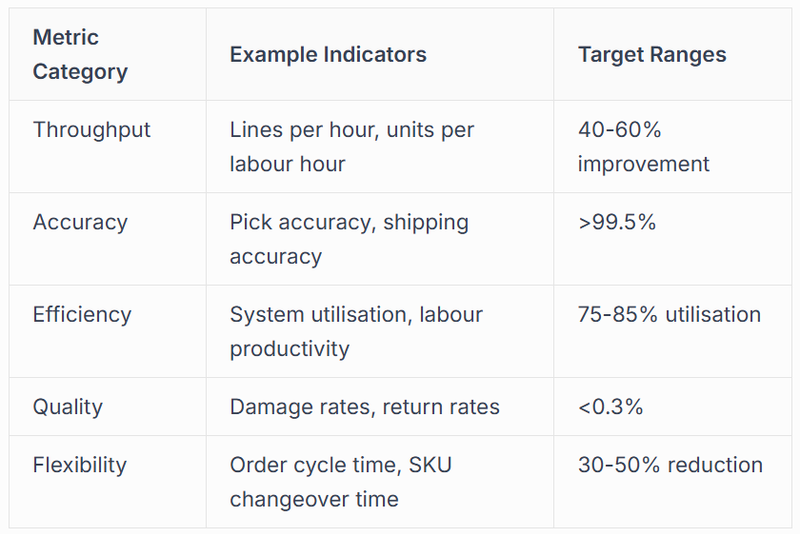
These indicators should align with customer commitments and business objectives rather than reflecting arbitrary improvement targets. The ISA's emphasis on automation's critical role in achieving operational goals highlights how properly measured automation drives measurable business outcomes.
Continuous Improvement Methodologies
Automation systems generate rich operational data that enables evidence-based improvement initiatives. Structured methodologies including Lean Six Sigma, Kaizen, and Theory of Constraints provide frameworks for systematically identifying opportunities, implementing changes, and validating results.
Regular system audits examine configuration settings, workflow logic, and integration parameters against evolving operational requirements. Many warehouses discover that initial automation configurations become suboptimal as order profiles, product mixes, and volume patterns shift over time.
Emerging Technologies and Future Trends
The solutions for automation landscape continues evolving rapidly, with emerging technologies promising new capabilities that will reshape warehouse operations over the coming years. Understanding these trends enables strategic planning that positions operations for future competitiveness.
Artificial Intelligence and Machine Learning
AI-driven solutions are transitioning from research laboratories to production warehouses, addressing challenges including demand forecasting, dynamic slotting optimisation, and predictive maintenance. Machine learning algorithms analyse historical patterns to anticipate requirements and automatically adjust system parameters.
Computer vision technologies enable robots to identify, locate, and grasp diverse objects without pre-programming specific handling parameters for each SKU. This capability dramatically expands the range of products amenable to robotic handling. Research into AI-assisted automation demonstrates how machine learning enhances system adaptability and performance across complex operational scenarios.
Autonomous Mobile Robotics
AMR technologies have matured rapidly, with robust navigation algorithms, sophisticated fleet management, and improved battery technologies enabling practical production deployment. These systems offer exceptional flexibility, adapting to changing layouts and workflows without infrastructure modifications.
Collaborative AMRs work safely alongside human workers, transporting goods, supporting picking activities, and automating inventory movements. The scalability of AMR solutions makes them particularly attractive for operations with variable volumes or uncertain growth trajectories. Resources covering order picking system options detail how AMRs integrate within broader automation strategies.
Digital Twin Technologies
Digital twin platforms create virtual replicas of physical warehouse operations, enabling simulation, testing, and optimisation without disrupting live operations. These models incorporate real operational data, allowing operators to evaluate process changes, test new workflows, and predict system performance under various scenarios.
Emerging digital twin applications extend beyond planning to provide real-time operational guidance, automatically adjusting system parameters based on current conditions and anticipated demands.
Industry-Specific Considerations
While fundamental automation principles apply broadly, specific industries face unique requirements that influence technology selection and implementation approaches. Understanding these nuances ensures solutions address actual operational demands rather than generic assumptions.
Cold Storage and Temperature-Controlled Environments
Automated solutions for temperature-controlled facilities must withstand extreme conditions while maintaining performance and reliability. Specialised components, environmental sealing, and condensation management add complexity and cost but enable automation in environments where human labour faces significant productivity constraints.
Energy efficiency becomes particularly critical in cold storage, where automation systems must minimise heat introduction while avoiding excessive energy consumption. Automated storage density improvements reduce refrigerated space requirements, delivering substantial ongoing cost savings.
Pharmaceutical and Regulated Industries
Pharmaceutical warehouses operate under strict regulatory requirements including lot tracking, expiry management, and chain of custody documentation. Solutions for automation in these environments must incorporate comprehensive traceability, validation capabilities, and audit trail generation that satisfy regulatory scrutiny.
Serialisation requirements add complexity to automated systems, necessitating integrated vision systems and database linkages that track individual units throughout handling processes.
E-commerce and Omnichannel Fulfillment
E-commerce operations face extreme volume variability, diverse product profiles, and compressed delivery timeframes that challenge both manual and automated operations. Effective automation strategies for e-commerce balance peak capacity requirements against average utilisation, often incorporating flexible technologies that scale gracefully across demand ranges.
Split-order processing, returns handling, and value-added services create operational complexity that requires sophisticated software orchestration complementing physical automation. Resources from automated manufacturing companies demonstrate how automation principles apply across diverse operational contexts including e-commerce fulfillment.
Risk Management and Business Continuity
Implementing solutions for automation introduces dependencies on technology systems that require careful risk management and business continuity planning. System failures, integration issues, or operational disruptions can severely impact fulfillment capability if not anticipated and mitigated.
Contingency Planning
Comprehensive contingency plans maintain operational capability during system outages, technology failures, or unexpected disruptions. These plans identify critical functions, establish manual fallback procedures, and define escalation protocols that guide response to various failure scenarios.
Essential contingency elements include:
- Manual processing workflows for critical order categories
- Inventory visibility during system outages
- Communication protocols for customer and stakeholder notification
- Decision frameworks for engaging vendor support or emergency services
- Recovery procedures that restore normal operations with data integrity
Regular contingency testing validates plan effectiveness and ensures staff familiarity with emergency procedures before actual incidents occur.
Vendor Partnership Management
Automation vendors become strategic partners whose ongoing support, responsiveness, and financial stability directly impact operational continuity. Vendor evaluation should extend beyond technology capabilities to examine support infrastructure, escalation processes, and long-term viability.
Service level agreements (SLAs) define expected performance standards, response timeframes, and remediation obligations. Effective SLAs balance realistic expectations against operational requirements, with clear consequences for non-performance that motivate vendor accountability.
Solutions for automation have evolved from optional enhancements to essential enablers of competitive warehouse operations, offering transformative benefits across efficiency, accuracy, and scalability dimensions. Success requires systematic planning, appropriate technology selection, comprehensive workforce development, and ongoing optimisation that extracts maximum value from automation investments. Automate-X combines deep expertise in warehouse automation with practical implementation experience across logistics, 3PL, e-commerce, and manufacturing environments, helping businesses navigate the complexities of automation and achieve measurable operational improvements. Contact our team to discuss how intelligent automation solutions can transform your warehouse operations and position your business for sustainable growth.